



e-TOLL shake-up: EURO alone no longer protects hauliers' margins
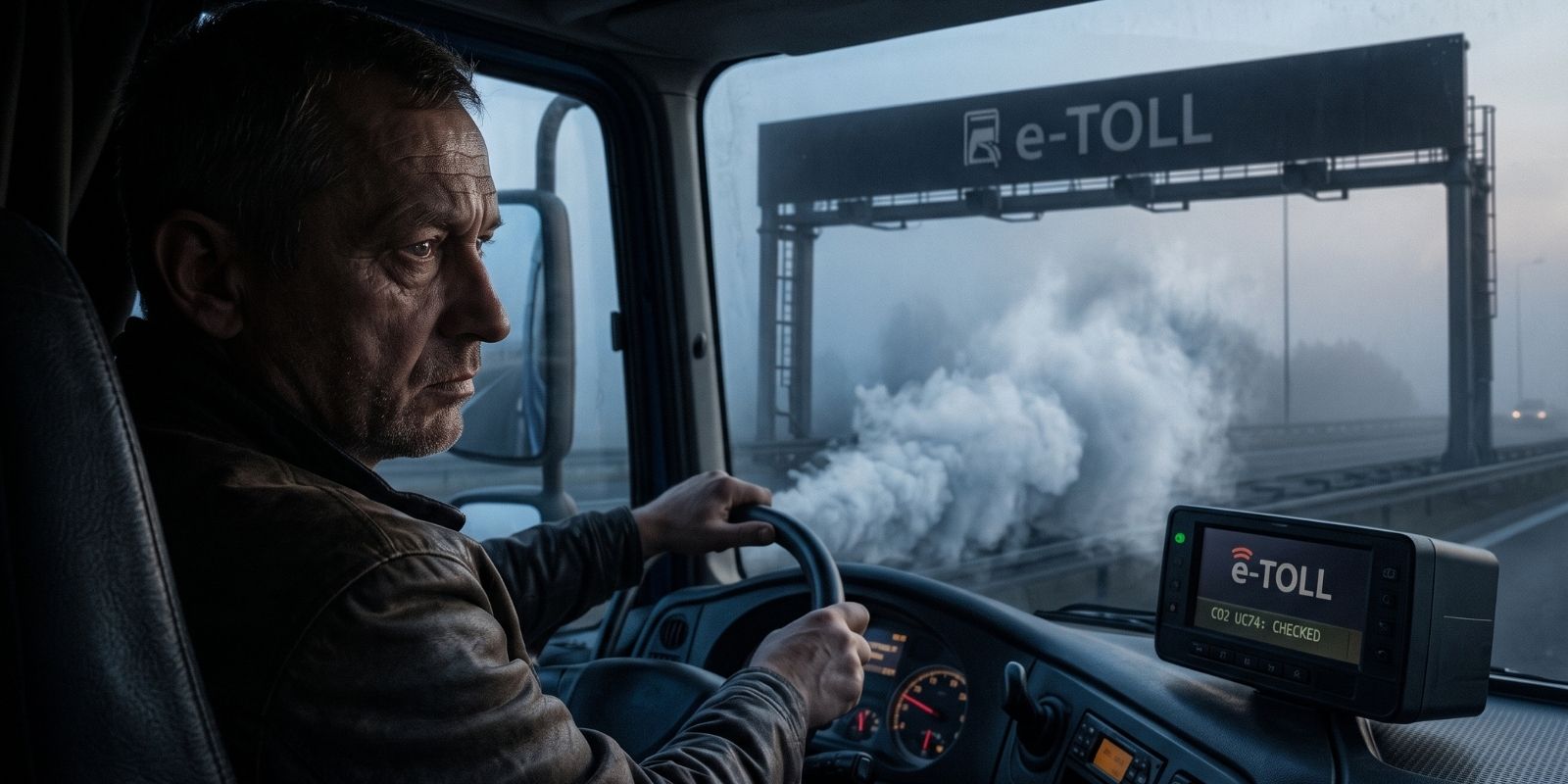
The Ministry of Infrastructure is preparing sweeping changes to the e-TOLL system that will hit older fleets hard. The UC74 draft bill turns the current tariff on its head, introducing mechanisms aimed squarely at carbon dioxide emissions. The EURO standard is no longer the only shield against high toll costs, as a strict CO2 classification comes into play.
Three new pillars of road tolls
The current system was based on a relatively simple multiplier. Entering a tolled section, a haulier knew exactly that a higher EURO standard meant a lower bill. EU Directive 2022/362, which the Polish government is implementing through the UC74 draft bill, dismantles that mechanism entirely. The new rate per kilometre will be split into three separate components.
The first is the infrastructure charge, the basic cost of maintaining the roads. It will continue to depend on the EURO class. The second component will cover the external costs of air pollution, which will also hit the owners of older, dirtier lorries in the pocket.
The real shock, however, comes with the third element: CO2 emission costs. This is completely new on Polish roads. Two lorries meeting the same EURO6 standard will pay very different rates at the toll gantries if they differ in individual fuel consumption and certified carbon dioxide emissions.
CO2 emission classes in the officials' sights
Every vehicle will be placed in one of five CO2 emission classes, which will feed directly into monthly invoices. Assignment to a given class takes into account the date of first registration, the vehicle category and subgroup, and its individual emissions as declared by the manufacturer.
The biggest risk for hauliers lies in how changeable this parameter is. While the EURO standard entered in the registration certificate is a fixed value, vehicles assigned to CO2 emission classes 2 and 3 will undergo mandatory reclassification every six years.
If EU guidelines are tightened after a few years, a lorry that has so far been cost-effective will drop into a lower, more expensive class. It will automatically lose the discounts it has earned in e-TOLL, pushing up the company's operating costs overnight.
The tax authority steps in: the end of anonymity
The National Revenue Administration (KAS) will verify the technical documentation of all lorries. Hauliers will have to submit detailed information on their vehicles' parameters to the e-TOLL register.
The authorities will not simply take declarations at face value. KAS will cross-check the data against certificates of conformity (COC) and information held in the Central Register of Vehicles and Drivers (CEPiK). Vehicle weight and year of manufacture are not enough: the system will examine the actual carbon footprint of each individual vehicle, to stamp out attempts to understate the assigned rate.
A bonus for going electric, and blanks in the tariff
The UC74 draft bill rests on a hard principle: zero emissions guarantee the lowest costs. Electric vehicles and vehicles without a combustion engine will receive the biggest discounts on tolled sections. Traditional diesel engines will gradually be pushed into the most expensive tariffs.
The Council of Ministers will take up the bill in the third quarter of 2026. The documents still contain no specific rates per kilometre, but owners of haulage companies need to plan fleet renewal now. Waiting for the full tariff could end in prohibitive toll bills for an older fleet.
FAQ: the most common questions about the e-TOLL changes
When will the new e-TOLL charges that take CO2 into account come into force?
The draft bill will go before the government in the third quarter of 2026. Although the exact start date for charging under the new rules is not yet known, hauliers must factor the coming costs into their leasing plans.
Will the EURO standard stop mattering once CO2 classes are introduced?
No. The EURO standard still determines the infrastructure charge and the air pollution cost. CO2 emissions become an independent, third cost component.
Where can I check which of the five CO2 classes my lorry belongs to?
The classification will be based on the vehicle's certificate of conformity (COC) and data from the CEPiK system. The final allocation tables will be published once the provisions of the UC74 draft bill have been approved.
Contact us today and ask about our offer of e-TOLL GPS devices.
biuro@datasystem.pl
801 88 77 88