



- Shop
- About us
- DSLocate App
- Your industry
- FAQ
- Blog
- Contact
-
Monitoring for
 sales representatives
 service technicians
 delivery drivers
 vehicle rental companies
 distributors
 construction machinery
 forklifts
 waste containers
 agricultural machinery
 trailers
 refrigerated vehicles
 municipal vehicles
 trucks
 buses
buses boats
boats people and objects
 theft protection
 mobile objects
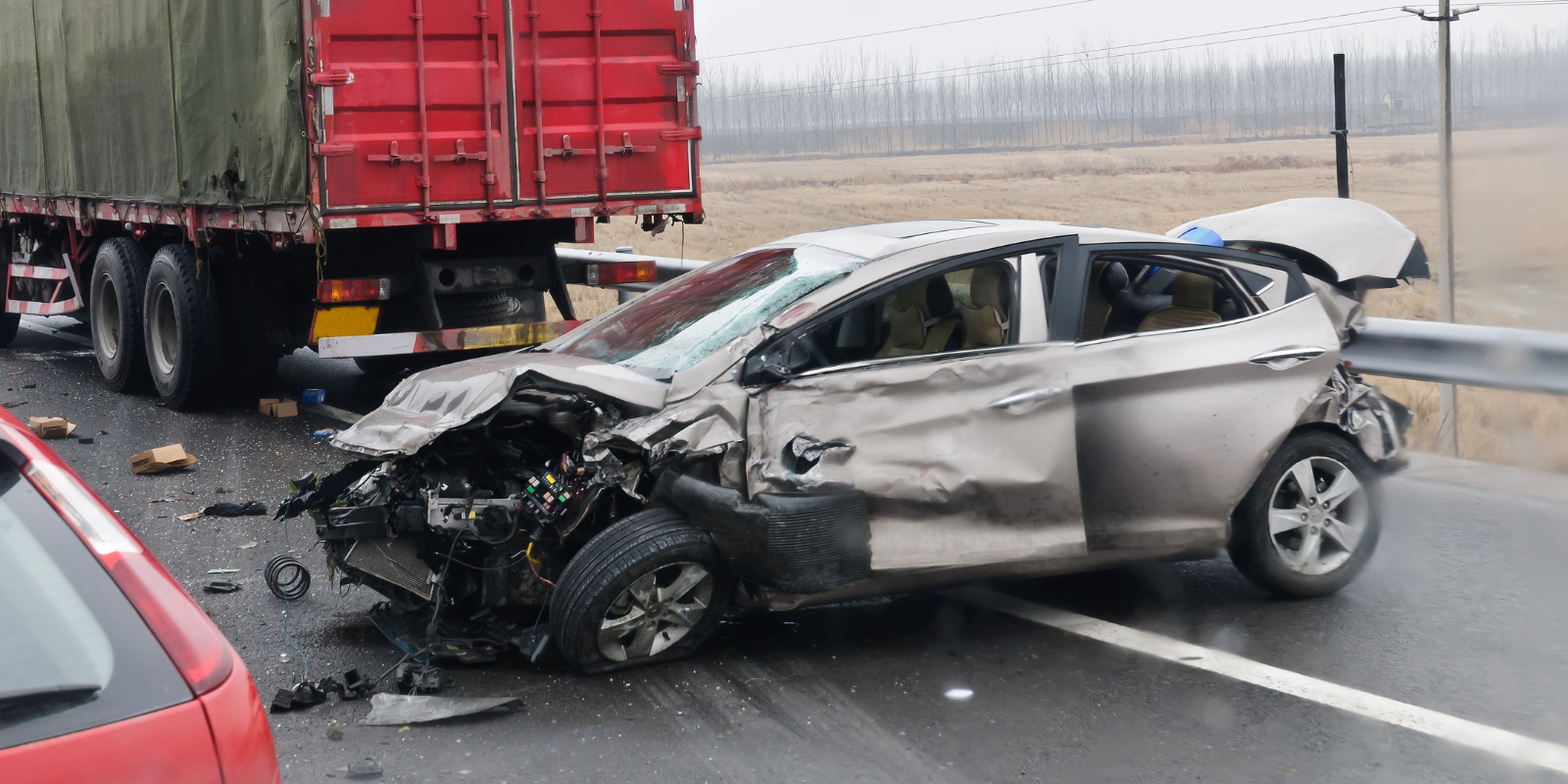
A company vehicle accident – how GPS “black box” data helps in disputes with your insurer
22.01.2026
Tuesday, 21:45. You have just managed to draw breath after a hectic day when your phone screen lights up with one of your drivers’ numbers. Instead of the usual check-in, you hear a tense voice and the sound of street traffic in the background. ‘Boss, I’ve had an accident. Not my fault, but the other driver is claiming I cut him up and was driving like a maniac.’
At a moment like that, every business owner and fleet manager’s mind runs through the same sequence: repair costs, loss of insurance no-claims discount, downtime, and – worst of all – the prospect of a drawn-out dispute with the insurer, which is just waiting for any excuse to refuse to pay out. The ‘one word against another’ scenario is the hardest battle you can fight on the road.
Fortunately, the days when we had to rely solely on the subjective accounts of those involved are becoming a thing of the past. Modern GPS monitoring from Data System acts as a ‘digital witness’ that never panics, never forgets details, and works exclusively with hard, mathematical facts. Here is how GPS ‘black box’ data genuinely protects your business at critical moments.
Digital reconstruction of an incident: numbers do not lie
Insurance companies are institutions built on statistics and risk analysis. Their aim is to protect their own capital, so any ambiguity in an incident description is often interpreted to the detriment of the fleet-owning company. A standard police report, while important, does not always capture the full dynamics of an accident.
The GPS monitoring system from Data System offers far more than just a dot on a map. Thanks to a high data sampling frequency, the system is capable of reconstructing the sequence of events with near-surgical precision.
Speed at ‘time zero’
This is the most common flashpoint. The insurer or the other party to the collision may argue that your driver contributed to the accident by driving too fast. A report from the Data System system can show the exact speed of the vehicle in every second leading up to the impact. If your employee was doing 48 km/h in a 50 km/h zone, you have irrefutable proof that they were obeying the law. That kind of evidence puts an end to all speculation about ‘excessive speed’ right at the point of lodging the claim.
Ruling out aggressive manoeuvres
Accusations of ‘aggressive driving’ or ‘sudden, unjustified braking’ are often heard. Data System telematics records g-forces and the way in which the accelerator and brake pedals are used. We can show in black and white whether braking was a reaction to a hazard or whether it genuinely bore the hallmarks of provocation.
Clash of narratives: subjective accounts versus system data
In post-accident disputes, what most commonly happens is a collision between two entirely different descriptions of the same situation. Rather than analysing tabular comparisons, it is worth looking at how hard data from the DSLocate system cuts through the most common arguments put forward by each party:
-
Vehicle speed: A witness may claim the car was ‘hurtling along’, while the system shows a steady 44 km/h with cruise control active.
-
Exact location of the incident: Instead of a vague ‘somewhere at the junction’, you receive precise GPS coordinates with a margin of error not exceeding two metres.
-
Exact time of the incident: A timestamp accurate to the second allows instant cross-referencing with footage from town centre cameras.
-
Driving style immediately before the collision: The report dispels myths about ‘sudden lane changes’ or ‘deliberately causing a bump’.
Fighting the ‘insurance hunters’: insurance fraud
Today’s roads can be an arena for fraudsters who specialise in so-called staged collisions. Their aim is simple: to engineer a collision in such a way that the formal blame falls on the driver of a company vehicle. They know that companies carry high third-party liability cover and rarely fight in court over relatively small sums.
By having a Data System system, you remove the ‘easy target’ sign from your fleet’s back:
-
Proof of smooth driving: The system demonstrates that your driver was moving predictably and in accordance with road traffic regulations.
-
Location verification: Fraudsters often attempt to manipulate the location of an incident to suit road infrastructure more favourable to their claim (for example, suggesting the collision occurred at a junction where they had right of way). GPS coordinates from the DSLocate system eliminate any possibility of location fraud.
‘In one of our disputes, the insurer tried to convince us the damage was our fault under our third-party liability policy, claiming our vehicle had struck another car in a car park outside a shopping centre. Using Data System data, we proved that at the time our vehicle was 15 kilometres away, at a loading bay. The case was closed in 15 minutes.’
– Marek, fleet manager at a haulage company.
Proof of presence – your digital alibi
Car park damage is the bane of fleets. You return to your vehicle and find a dented door, with the culprit long gone. Or – worse still – you receive a notice from the insurer claiming your vehicle allegedly scratched someone else’s car when your driver was nowhere near the scene.
In situations like these, Data System provides irrefutable proof of presence (or its absence). A chronological record of the route allows you to rule out the vehicle’s involvement in an incident if at the relevant time it was elsewhere or simply parked at your depot. This is crucial in cases involving alleged hit-and-run incidents, where the stakes are high and the legal consequences for the business can be severe.
Safety scoring as a line of defence in court
Often overlooked yet extraordinarily effective in disputes with insurers is Safety Scoring: an assessment of the driver’s driving style. Imagine this situation: a compensation claim is before the court, and the opposing counsel is attempting to portray your employee as an irresponsible and reckless individual.
At that point, you produce a report covering the last six months. If DSLocate rates your driver’s driving style as good, showing that they consistently avoid sudden manoeuvres and observe speed limits, the entire ‘road pirate’ narrative collapses like a house of cards. In doing so, you build enormous credibility for your employee in the eyes of the court or the loss adjuster.
Private versus business mode – an end to disputes over policy scope
Some fleet insurance policies contain restrictions on vehicle use outside working hours. Insurers frequently look for a loophole, suggesting that the accident occurred during a ‘private trip’, which could be grounds for refusing to pay out or for pursuing a right of subrogation.
The Data System system allows you to separate these two modes precisely. Thanks to intuitive toggles (physical or in-app), the report clearly shows which mode the vehicle was in at the time of the collision. This puts an end to any discussion about unauthorised use of company property and provides the business owner with financial security.
Are GPS data accepted by Polish courts?
This is the question that comes up most frequently. The answer is: yes, data from certified telematics systems is fully admissible as evidence in civil proceedings.
Modern courts increasingly rely on expert opinions in the field of accident reconstruction, and those experts in turn rely on data from systems such as Data System. Why? Because such data is difficult to manipulate and considerably more reliable than fallible human memory. Having professional monitoring places your company in a privileged negotiating position even at the pre-litigation stage.
FAQ: legal and technical aspects of the GPS ‘black box’
1. Can an insurer challenge a report from the Data System system? An insurer may attempt to challenge any piece of evidence; however, data from a professional telematics system that holds the appropriate approvals and certification is extremely difficult to refute. When faced with an expert opinion backed by hard data, insurers typically opt for settlement.
2. How long is collision data retained in the system? At Data System we ensure that route and event history remains accessible to the customer for a long period, allowing you to revisit a case even many months later – for example when a civil claim arrives.
3. Does fitting an e-TOLL GPS tracker affect the vehicle’s warranty? No, provided the installation is carried out by an authorised service centre, or involves plugging the device into the OBD socket. Data System offers plug-and-play solutions that are completely safe for the vehicle’s electronics.
4. Can monitoring data be used against my driver? Data is objective. If a driver genuinely committed a serious breach of the rules, the system will record it. However, in the majority of disputed cases, telematics acts as a shield protecting honest employees from unjust accusations.
5. Is a GPS system report sufficient to win a court case? The report is a key piece of material evidence. Whilst the court takes into account the full body of evidence (witness statements, town centre camera footage, expert opinion), telematics data is the hardest element of the puzzle to challenge.
Summary: do not let chance decide what happens to your money
A company vehicle accident is always stressful and costly. You can, however, minimise the negative consequences by investing in a solution that works in your favour around the clock. GPS monitoring from Data System is not merely a tool for fuel control or e-TOLL settlement – it is above all a powerful insurance policy for disputed situations.
Protect your fleet and rest assured that, in the event of a collision, the truth will be on your side. Data is the hardest currency in any conversation with your insurer.
Would you like to find out how the Data System system can protect your fleet from unjustified costs?
Contact our adviser and arrange a free demonstration of the DSLocate system’s capabilities. Do not wait for the first accident – be prepared before the driver’s call comes in.
biuro@datasystem.pl
801 88 77 88