



- Shop
- About us
- DSLocate App
- Your industry
- FAQ
- Contact
-
Monitoring for
 sales representatives
 service technicians
 delivery drivers
 vehicle rental companies
 distributors
 construction machinery
 forklifts
 waste containers
 agricultural machinery
 trailers
 refrigerated vehicles
 municipal vehicles
 trucks
 buses
buses boats
boats people and objects
 theft protection
 mobile objects
Five myths about GPS tracking that many business owners still believe
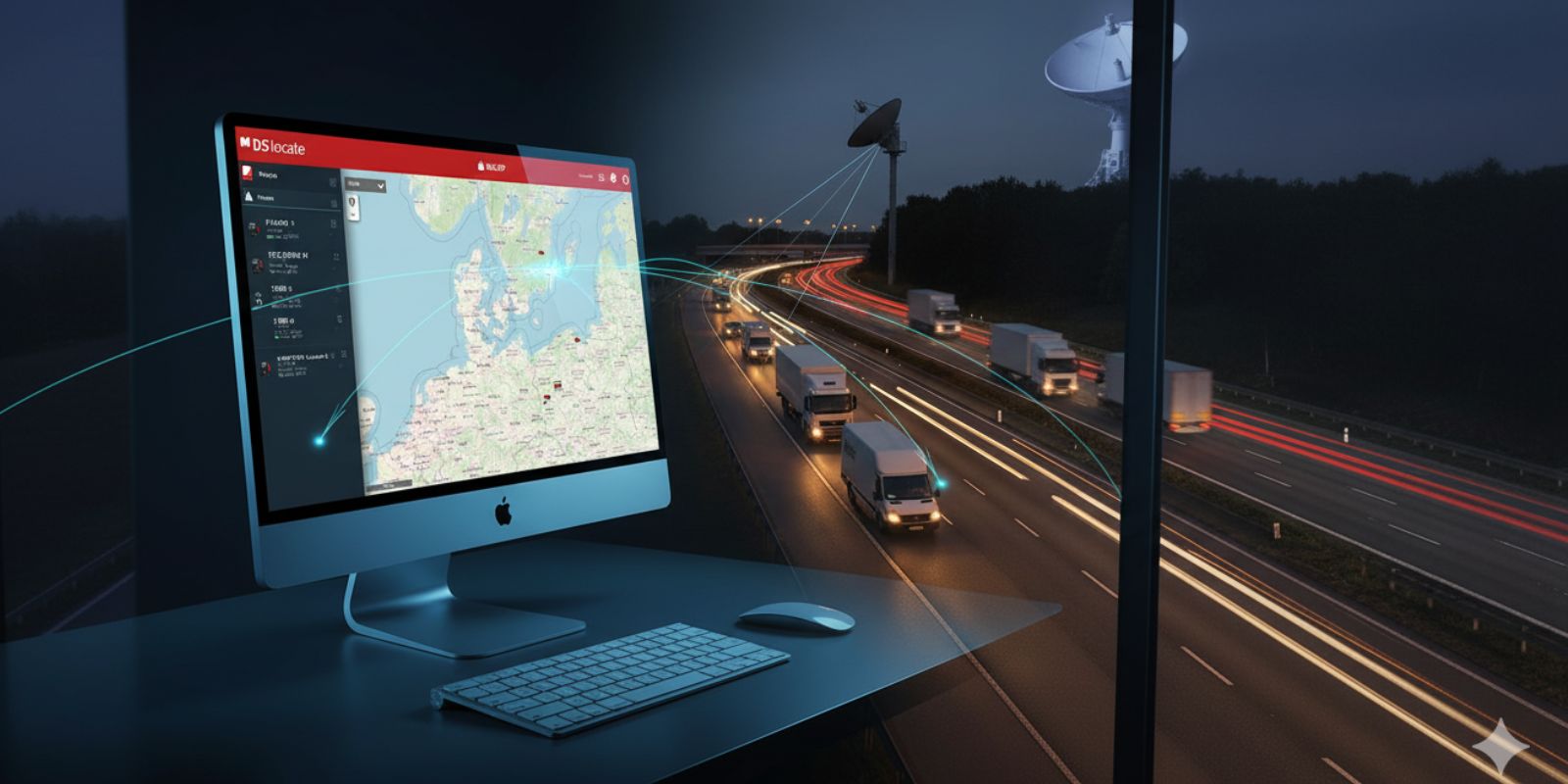
"GPS monitoring? Oh, so you want to track your drivers!" – this is just one of the popular myths that still circulate among business owners and managers. Although location technology has been developing for years and delivers tangible benefits, many companies still treat it with suspicion. It is time to debunk the five most damaging misconceptions about GPS monitoring and show how this solution really works – and who stands to gain.
Myth 1: "GPS is only for tracking people"
This is by far the most frequently repeated myth, one that effectively discourages business owners from adopting modern technologies. GPS monitoring is still sometimes perceived as a form of surveillance, a tool of control, or a sign of distrust towards employees. The reality, however, is quite different.
GPS systems are primarily designed for analysing operational data – such as routes travelled, working hours, fuel consumption, and the number of idle periods. This makes it possible to optimise a company’s entire operations, increase efficiency, and reduce operating costs. In a modern approach, it is not a stick but a compass – a tool that helps you make sound decisions.
"GPS monitoring has nothing to do with distrust towards employees. It is a way of collecting data that helps everyone perform better – both drivers and managers."
— Maciej Tatarynowicz, Expert at Data System
Myth 2: "This technology is only for large fleets"
Many small business owners assume that GPS is a solution designed exclusively for fleets comprising dozens of vehicles. In fact, location technology is used by companies with just a handful of employees and a few cars.
GPS monitoring works brilliantly for construction crews, field service engineers, local couriers, and sales representatives. In each of these sectors, better work organisation, faster response to customer needs, and lower unnecessary costs can be achieved.
What is more, today’s systems are scalable – you can deploy them for just one lorry or three passenger cars and then expand as the business grows.
Myth 3: "It doesn’t pay off – it costs more than it delivers"
This belief effectively prevents many companies from investing in GPS. The costs of the system tend to be overestimated, whilst the benefits are undervalued. In reality, GPS monitoring very often pays for itself within just a few months of use.
Companies using location systems notice reduced fuel consumption, improved route planning, fewer empty runs, and shorter order fulfilment times. On a monthly basis, this can translate into real savings of several hundred or even several thousand zł – depending on the size of the fleet.
Investing in GPS not only pays for itself but also protects the company against losses resulting from inefficiency, poor work organisation, or improper use of vehicles.
Myth 4: "It is just a tracker – it shows where the vehicle is, and that is it"
The days when GPS was used solely to pinpoint a vehicle’s position on a map are long gone. Today’s systems are advanced analytical tools that offer far more than just route tracking.
Modern solutions enable analysis of driver behaviour, fuel consumption control, idle-time detection, and integration with other systems such as CRM, TMS, and ERP. As a result, a company can not only track vehicles in real time but also make decisions based on hard data rather than guesswork.
All of this translates into greater predictability, safety, and operational stability for the business.
Myth 5: "Drivers and employees will not accept monitoring"
Fear of internal conflict within the team is a common argument against implementing GPS monitoring. Business owners worry that employees will see it as an attempt at excessive control and react negatively.
In reality, the path to success lies in how the system is introduced. Above all, it is essential to embrace openness, honest communication, and to demonstrate that GPS is intended to benefit everyone – not just the business owner.
How to implement GPS in your company without conflict:
- Explain why you are doing it – focus on arguments such as safety, work organisation, and cost savings.
- Emphasise that the solution applies to company vehicles and is not intended to intrude on employees’ private lives.
- Highlight the positives: fewer phone calls asking "where are you?", automated reports, and even the opportunity to reward good driving style.
- Present data as a tool for mutual development, not a means of control.
- Establish clear rules for using the system and ensure transparency.
"In every company there will be someone sceptical. But when you show people that GPS is not a stick but a compass – you will earn trust and better cooperation."
— Łukasz Działakiewicz, Expert at Data System
Summary: time for data, not guesswork
GPS monitoring is neither a luxury nor a threat to the team. It is a technology that – with the right approach – can help a company operate faster, smarter, and more cost-effectively.
Today we have debunked five myths that effectively prevent many businesses from reaching a higher level of organisation and management. At a time when data is becoming a key business asset, a lack of access to information about how your fleet moves is like running a company with your eyes closed.
"Every myth is a cost. Data is an advantage."
Instead of believing in outdated assumptions, it is worth looking at the facts. GPS monitoring is a tool that – regardless of the size of the company – can deliver real results. You just need to give it a chance.
Find out how your company can start saving today. Discover Data System solutions and contact our team of advisors to learn which options best suit your needs.